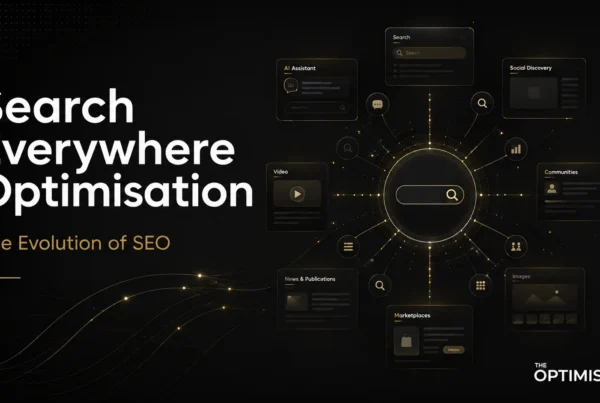


Search interfaces have changed fundamentally in 2026. AI-generated overviews now appear above organic results, synthesising answers from multiple sources. Zero-click results, in which the search engine resolves the query itself, have become the norm for an increasing proportion of searches. Users get what they need without ever visiting a page.
This is what defines “invisible” search, a growing trend towards zero-slick searches. For brands, the implications are significant, but not game-breaking. Being ranked doesn’t mean you’re always being seen, and being seen doesn’t always mean you’re being visited. Search traffic has always served as a means to an end, and while still relevant, the bigger variable is influence. With search traffic now being one of several ways to reach and influence your audiences online, the question then is how your approach should change – a challenge we will examine today.
Why Influence is Moving Upstream: From Landing Pages to Search
For most of SEO’s history, the goal was simple: rank on page one, earn a click, drive a visit. Visibility and traffic were essentially the same thing. If users could find you in search, they came to your website. While this model remains one of digital marketing’s fundamentals, new possibilities have emerged with the rise of AI search. For most of search’s history, the job of a search engine was to retrieve and rank. A user typed a query, the engine returned a list of pages, and the user chose which page to visit. The engine was a directory with the end-destination and value living elsewhere.
If users are getting answers inside search interfaces rather than on your landing pages, then influence now happens further upstream. It happens in the moment a query is interpreted, and the answer is constructed. This is where the competitive gap is opening. Brands that are clearly represented in AI search are shaping perception before users ever decide to click. They appear in summaries tucked away in AI overviews, and their perspectives are called upon as authorities on the search subject.
When users look for a product to resolve a specific pain point or general information on a topic, the brands that get mentioned become associated with the right concepts and issues. That association is commercially valuable even if it doesn’t appear as logged engagement in Google Analytics. When absent from this layer of search, brands risk becoming “invisible”. They may still rank on the first page or show up in the top results, and traffic will continue to flow. But in the long run, they are unseen from a new source of trust.

Why Being Visible in AI Search Matters
The rise of AI-generated answers is not just about declining traffic. Brands will also need to keep an eye on another side of user engagement: trust and credibility. When an AI system constructs a response to a query, it draws from sources it deems authoritative, relevant, and well-structured. Being included signals that your brand is recognised as a credible voice on a subject. Being excluded signals the opposite or nothing at all.
Brand Associations are Happening at the Query Level
When a user searches for a problem your business solves, the brands referenced in the AI response become associated with that problem and its solution. That association influences future behaviour: what they search for next, which brand they seek out directly, and whose name feels familiar when a purchase decision is made. Whether someone is looking for how to care for their body after major surgery or wants to learn more about interior design principles, the brands that answer these questions gain an advantage.
Trust Needs a Consistent Presence
AI search rewards consistency. Brands that demonstrate clear expertise across a topic cluster are more likely to surface repeatedly across related queries. That repeated presence compounds, as editorial coverage does, by building recognition and credibility over time. Although GEO represents a new type of optimisation, the reasons it is important remain the same.
Influence Without Clicks is Still a Form of Influence
Treating traffic as the only measure of search impact means ignoring a growing portion of where influence actually occurs. Even if a user has never visited a site, their understanding of the market and who is trustworthy is shaped by who they see mentioned in an AI overview or LLM-generated comparison.
For example, in eCommerce, someone may use an LLM to find local shops that sell a specific product. A platform like ChatGPT can create a map that shows different options available to the user, along with an accompanying blurb. Having accurate, up-to-date info for the AI to pull from is key to earning trust.
The Gap Between Present and Absent Brands will Widen in the Future
AI systems learn associations between sources and topics over time. Brands that build clear topical authority now are establishing the signals that determine future visibility. Brands that delay are standing still and risk falling behind.

What Makes a Brand Visible When There Is No Click to Win
If influence begins even before someone clicks, then page ranking is no longer the only goal for content optimisation.
Topical Authority, Combined with Keyword Coverage
A brand that publishes consistently and coherently around a defined subject area builds the kind of conceptual depth that AI systems associate with credibility. A brand that publishes broadly in pursuit of traffic volume builds noise. Only investing time into the latter risks staying “invisible.” Notably, if a page is relevant and useful for a search query, it will naturally include the keyword in a sufficient amount, alongside semantic variations.
Consistency of Identity Across the Web
AI search systems map entities, brands, people, products, and places, and build associations between those entities and the topics they relate to. A brand with a fragmented or inconsistent presence across platforms, publications, and business listings is harder to map with confidence. Consistency of name, positioning, and subject association is key.
A credible off-site presence
Mentions in industry publications, editorial links, and references in third-party content all signal to AI systems that a brand is recognised beyond its own domain. Zero-click environments make this kind of earned authority more valuable.
SEO Is Not Over: How to Meet the Challenge of “Invisible Search”
There is a convenient, simplified narrative that zero-click search and AI overviews have made SEO redundant. That is not what the evidence suggests. Instead, the bar has moved. Mechanical optimisation, such as adjusting keyword density, had already become less relevant before AI search arrived. What has changed is the urgency. The brands still operating on those assumptions are not just behind the curve. They are optimising for a version of search that is no longer the sole deciding factor in which brands will succeed.
At The Optimisers, we work with brands navigating exactly this shift. The move from keyword-led SEO to authority-led GEO requires a different framework that can adapt to new measures of success. If your traffic has been waning despite consistent, quality effort, the issue may not be in execution. We help brands understand where they stand in AI search and build a strategy to bridge the gaps, grounded in how GEO functions in practice. Get in touch to start with a strategic review.